

Anatomy of Trust in E-commerce: Reviews, EU Omnibus Pricing and Returns Without the “Fake” Effect
European online shoppers have sharp radar for dropshipping pop-ups and manufactured urgency. Show them five empty stars, an unverified “9.6/10” quote box, or a vague “€100 off” claim with no conditions - and instead of confidence, they feel guarded. Here is what actually builds trust today, and what quietly destroys it.
When a buyer hears your store name for the first time - after clicking a Google Shopping or Instagram ad - one quiet question sits in the back of their mind: “Will this parcel actually arrive, and will returning it turn into a headache?”
In theory, every store knows trust matters. In practice, many implement it on autopilot: pasting generic “John D. - great store!” testimonials, leaving empty star widgets on zero-review products, and flashing vague discount promises without clear reference prices. The result is the opposite of reassurance.
“Trust in e-commerce is never built by a ‘100% Satisfaction Guaranteed’ sticker. It is built by verifiable facts: named review platforms, honest 30-day Omnibus pricing, real company details in the footer and a human return policy.”
- PUSH Trust Layer StandardBelow we walk through three common anti-patterns from live store audits, contrasted with a concrete example from our own public case study.
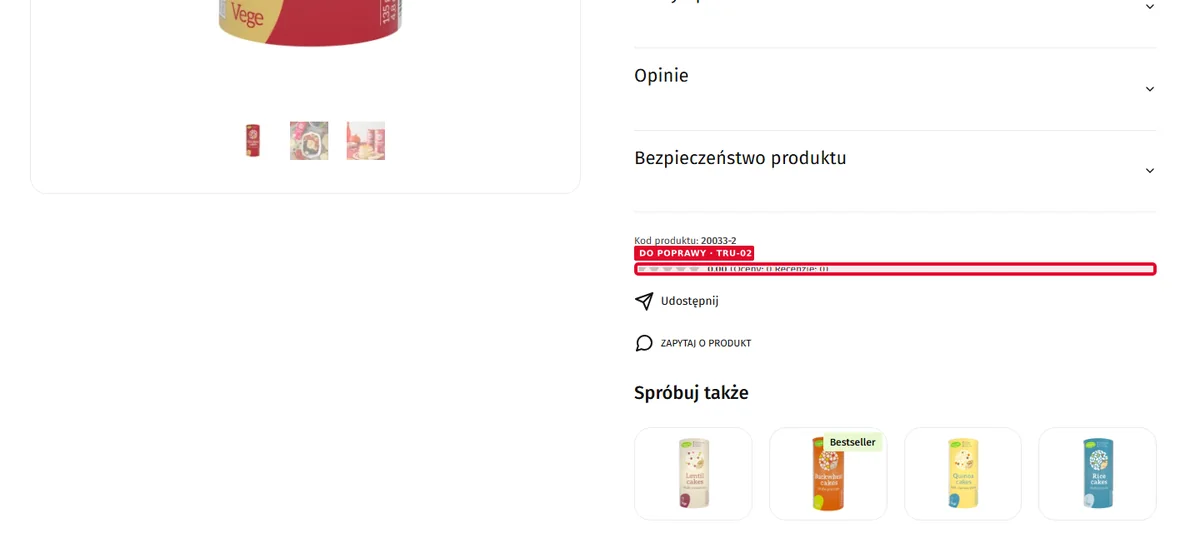
“0.00 (Ratings: 0 Reviews: 0)” - when zero reviews shouts louder than a mixed review
Look at the product page capture below (flagged TRU-02). Right below the SKU sits a row of five grey empty stars spelling out “0.00 (Ratings: 0 Reviews: 0)”, paired with a collapsed empty “Reviews” tab above it.
Psychologically, advertising “0 reviews” next to your buy button is never neutral - it tells the visitor “nobody else has tested this yet, you are the guinea pig”. In any catalogue with hundreds of SKUs, new arrivals naturally start with zero reviews, but your UI should never spotlight that emptiness.
- Hide product stars until real reviews exist: render item-level stars only from the first 1-2 verified reviews onward.
- Fall back to verified store rating: on new arrivals, display a compact store-wide score from an external platform (Google Reviews, Trustpilot) so buyers see the store itself is proven.
- Trigger post-delivery review emails: ask 7-14 days after delivery, not on the day the order is placed.
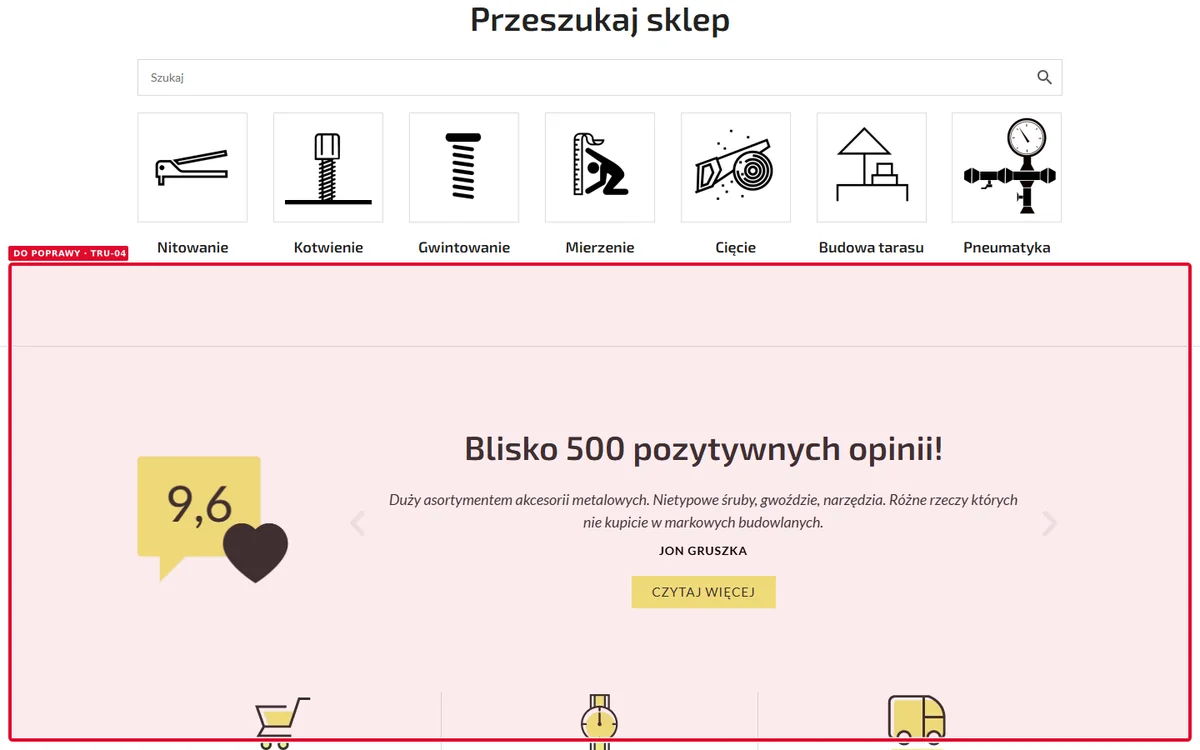
“Nearly 500 positive reviews!” - a static slider with a typo and zero external proof
This capture from a hardware store (flagged TRU-04) is a classic pattern across mid-market e-commerce: a giant yellow “9.6” speech bubble with a heart, a headline claiming “Nearly 500 positive reviews!”, a short quote containing a grammatical typo, and zero indication of where those reviews came from. Google? Trustpilot? Or three sentences typed manually into the CMS?
Modern shoppers spot hand-typed praise instantly. Ironically, a verified 4.7-4.9 feed showing real dates, buyer names and occasional minor critiques with polite store replies beats a spotless static 5.0 slider every time.
- Name and link the external source: show the verified platform (Google, Trustpilot, Ceneo, Allegro) and recent review dates.
- Mark “Verified purchase” honestly: required under EU Omnibus rules for on-site product reviews, along with a short note explaining how reviews are verified.
- Collect customer photos and context: one photo of installed blinds, lighting or equipment in a real room outperforms ten generic “fast shipping!” comments.
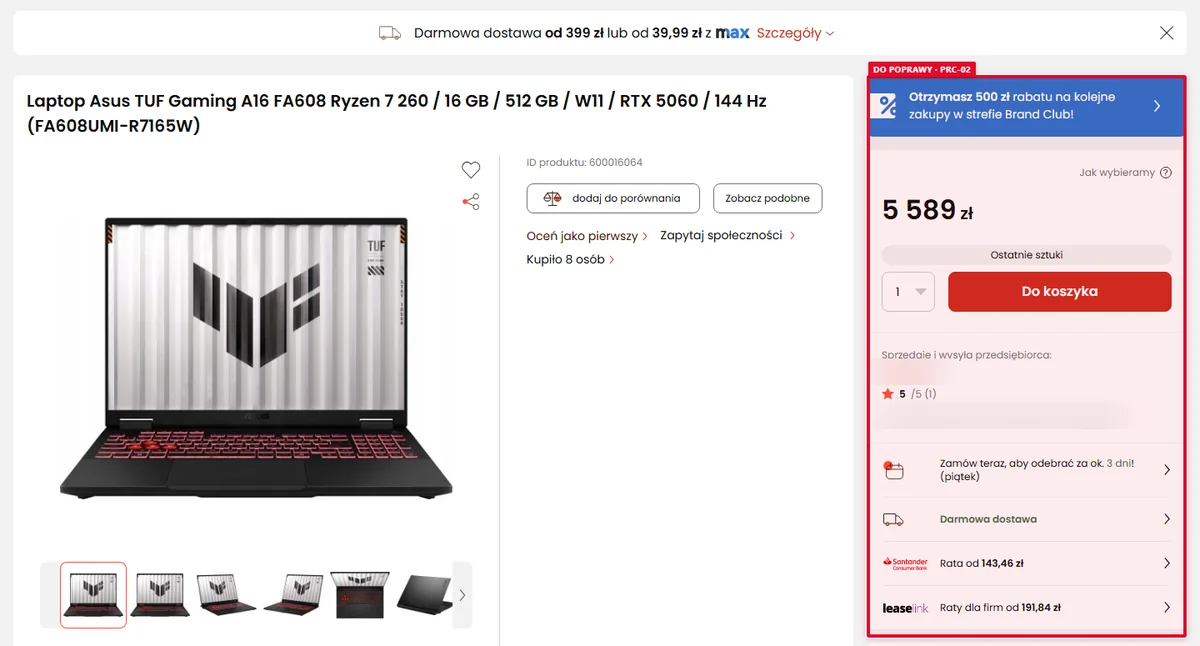
“Get €115 off”, “Last items left” and discounts without clear reference pricing
After years of inflated Black Friday pre-pricing, European buyers distrust loud discount claims that hide the fine print. Look at the electronics store capture below (flagged PRC-02): a bold blue banner inside the buy-box promises a large future-order discount without visible conditions or reference pricing, stacked right above a grey “Last items” urgency pill.
Skipping EU Omnibus 30-day lowest-price labels on strikethrough discounts - or running fake countdown timers that reset in incognito mode - triggers the exact same reaction. Instead of urgency, shoppers assume there is a catch buried in the terms.
- State clear terms next to every promo claim: whenever you advertise “€100 off” or “-20%”, show the reference price and eligibility in one plain line.
- Show EU Omnibus 30-day lowest price cleanly: place “Lowest price in the last 30 days before discount” directly beneath every crossed-out price on product pages and category grids.
- Use real inventory counts only: if stock truly is low, pull the actual number from your ERP (“3 left in stock”). Never fake scarcity.
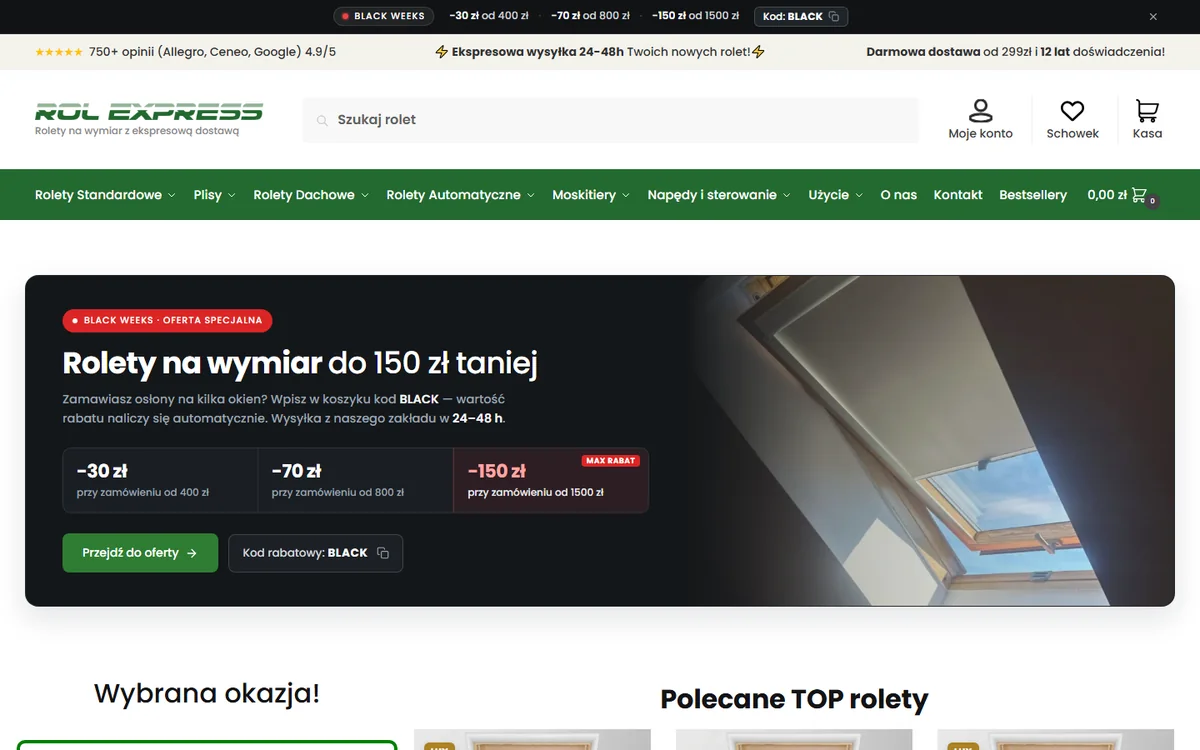
Concrete proof instead of fluff: named review sources, dispatch time and transparent rebate tiers
For contrast, look at the first screen of our public Rolexpress.pl case study. Instead of vague slogans about “top quality and professionalism”, four verifiable trust cues work together right above the fold:
Across the top bar sit hard numbers with explicit sources: “750+ reviews (Allegro, Ceneo, Google) 4.9/5”, “Express dispatch in 24-48h” and “Free delivery & 12 years of experience”. Inside the hero offer, instead of a fuzzy “up to -50%”, exact cart discount tiers are laid out clearly alongside a one-click copyable promo code. Zero guesswork, zero hidden fine print.
- Top bar and PDP buy-box: 2-3 verifiable numbers (named review sources, real dispatch window, free-shipping threshold, direct manufacturer status).
- Transparent promo mechanics: clear spend tiers and copyable codes instead of cryptic “unlock a mystery discount” banners.
- Store footer: full legal company name, VAT/tax ID, physical street address, real phone number and support hours - missing legal details are a top scam red flag.
- Human returns page: five clear bullets explaining how to send a parcel back and how many days refunds take, not a wall of legal jargon.
Contact
Book a free 15-minute consultation.
Fill in the form. Dawid Śliwiński (Co-founder of PUSH) will analyse your store and get back to you within 24 hours with an actionable plan.

“Instead of hunting for random freelancers for every fix, we handed them full control over technology and campaigns. The store finally runs without issues, our customer acquisition costs dropped drastically, and we can focus solely on logistics and order fulfilment.”
Martyna - Co-owner, Rolexpress.pl